
Fence & gate services
Cedar Fence Installation
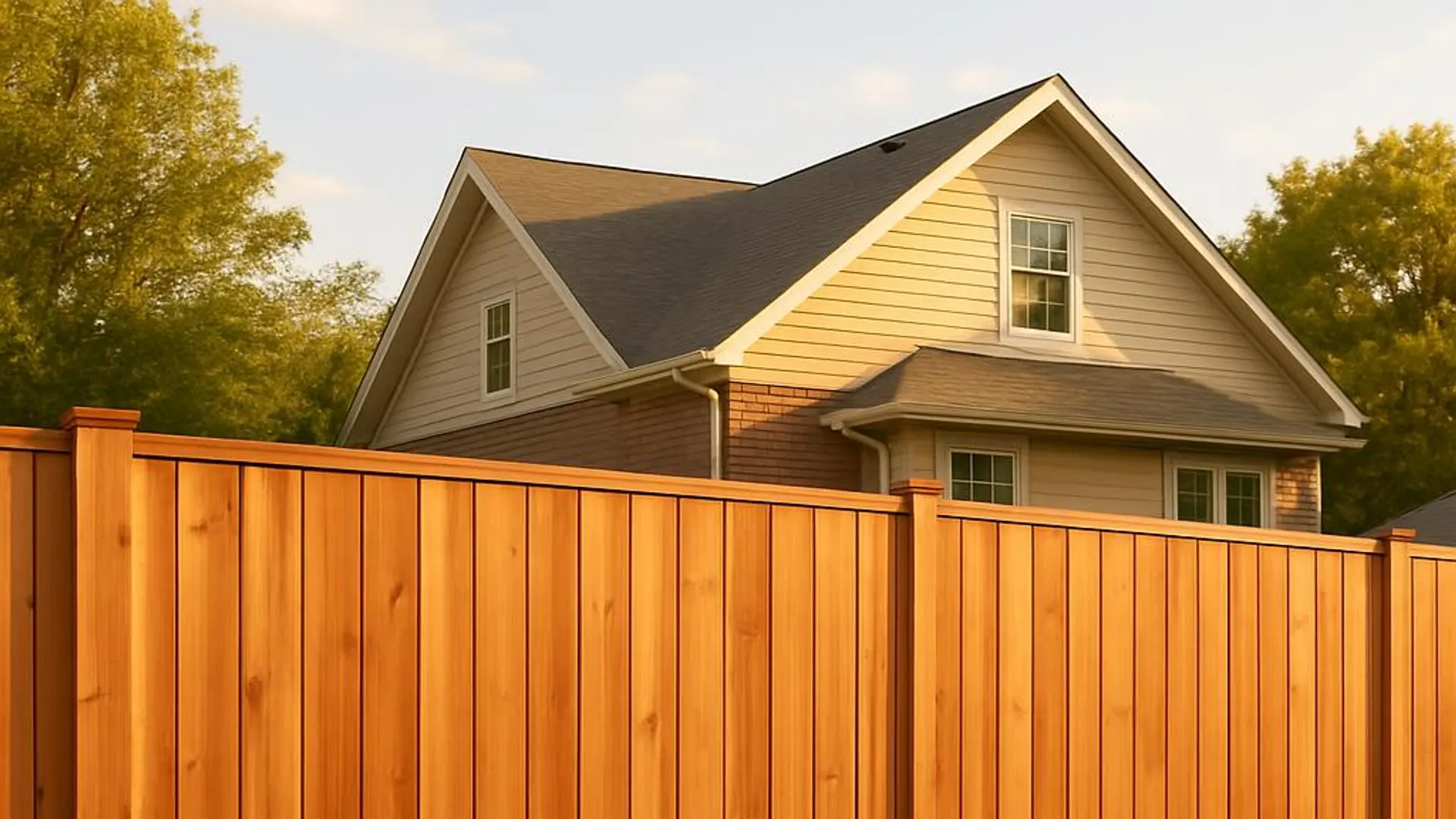
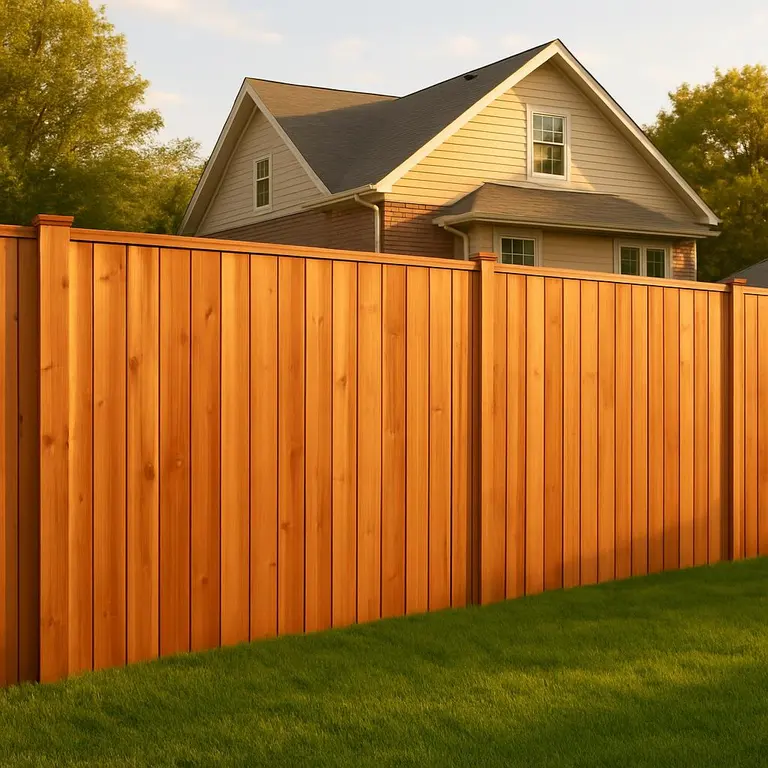
Western red cedar is the material people choose when the fence is part of how the property presents. It is warm, it takes stain beautifully, and it does not need chemical treatment to resist rot.
Licensed & Insured
PA Home Improvement Contractor #PA035784
Free Written Estimates
On-site assessment included
Permits & HOA Handled
We file on your behalf
Workmanship Guarantee
On every installation
Cedar Fences in Chester & Delaware County
Cedar earns its cost through its own chemistry. The heartwood contains natural oils and tannins that resist rot and insects without pressure treatment, which is why a cedar fence can be left unfinished to weather to a silver-grey and still hold structure.
It is also the most stable common fence softwood. Cedar moves less than pine as humidity swings, which means fewer cupped boards, fewer popped fasteners and a straighter line five years on. On board-on-board and shadowbox builds, where shrinkage directly determines whether the fence stays private, that stability is the whole argument.
Grade matters. Clear cedar has no knots and the highest price; select tight-knot is the practical premium choice for fencing; construction-grade cedar carries larger knots and is where most panel stock comes from. We specify by grade rather than by "cedar", because the difference between them is substantial and invisible in a quote that just says the species.
Options
Styles & Configurations
Cedar board-on-board
The premium privacy build — overlapping boards, identical both sides, stays private as the wood dries.
Cedar shadowbox
Alternating boards, airflow, finished both faces. The common HOA-compliant privacy answer.
Cedar picket
Traditional spaced picket, well suited to borough and historic-district properties.
Cedar post-and-rail
Rustic frontage and paddock fencing that suits large-lot Chester County properties.
What to expect
How the Installation Runs
- Site walk, grade assessment and grade-of-cedar specification.
- PA One Call utility mark-out.
- Township permit and HOA architectural submission.
- Post setting below frost line in concrete footings.
- Board and rail installation, gate framing.
- Walk-through, plus guidance on when the cedar will be ready to take stain.
Common questions
Cedar Fences Questions
How long does a cedar fence last?
Western red cedar typically lasts 15–25 years in this climate. Cedar left to weather naturally still resists rot through its own heartwood oils; periodic staining extends life at the upper end of that range and preserves the warm colour rather than letting it silver.
Do I have to stain a cedar fence?
No. Cedar is naturally rot and insect resistant and will perform unfinished, weathering to a silver-grey. Staining is about appearance and about adding years at the margin. If you do stain, wait until the wood has dried enough to accept it — usually a few weeks on new cedar.
What grade of cedar should a fence be?
Select tight-knot is the practical choice for most fencing: no large or loose knots, good stability, sensible cost. Clear cedar is knot-free and premium-priced, generally reserved for feature sections. Construction-grade carries larger knots and is what most pre-built panel stock uses.
Why does cedar cost more than pressure-treated pine?
It is a slower-growing, more dimensionally stable species with natural rot resistance built into the heartwood rather than added by chemical treatment. It stays straighter, takes stain better, and looks like a finished material rather than a treated one.
Will a cedar fence turn grey?
Yes, if left unfinished — UV breaks down the surface lignin and the wood weathers to a silver-grey within a season or two. This is cosmetic, not structural. A semi-transparent stain applied on a three-to-five year cycle holds the warm tone.
Get a free cedar fences estimate
On-site assessment. Written quote. No obligation.