
Fence & gate services
Wood Fence Installation
Wood is still the material that reads as a fence. It takes stain, it can be built to any profile, and when the posts are set right it holds its line for two decades.
Licensed & Insured
PA Home Improvement Contractor #PA035784
Free Written Estimates
On-site assessment included
Permits & HOA Handled
We file on your behalf
Workmanship Guarantee
On every installation
Wood Fences in Chester & Delaware County
Wood fencing covers the widest range of what people actually want: picket, privacy, board-on-board, shadowbox, post-and-rail, and custom profiles that no panel system will produce. It is the material we build most often when a property has character worth matching.
The species decision drives everything downstream. Western red cedar has natural rot and insect resistance, holds stain well, and is dimensionally stable — 15–25 years with reasonable care. Pressure-treated southern yellow pine is the value option, structurally sound and protected against rot, but it moves more as it dries and wants a stain schedule to avoid cupping and greying. Spruce panels are the cheapest and the shortest-lived; we generally steer people away from them for anything on a visible property line.
What actually determines whether a wood fence lasts is below grade. Posts set in undersized holes, above the frost line, or without proper drainage will heave and lean regardless of what species is above them. That is where the money should go.
Options
Styles & Configurations
Picket
Spaced pickets, traditional or contemporary cap profile. Defines a boundary and suits historic properties in borough settings.
Privacy (solid)
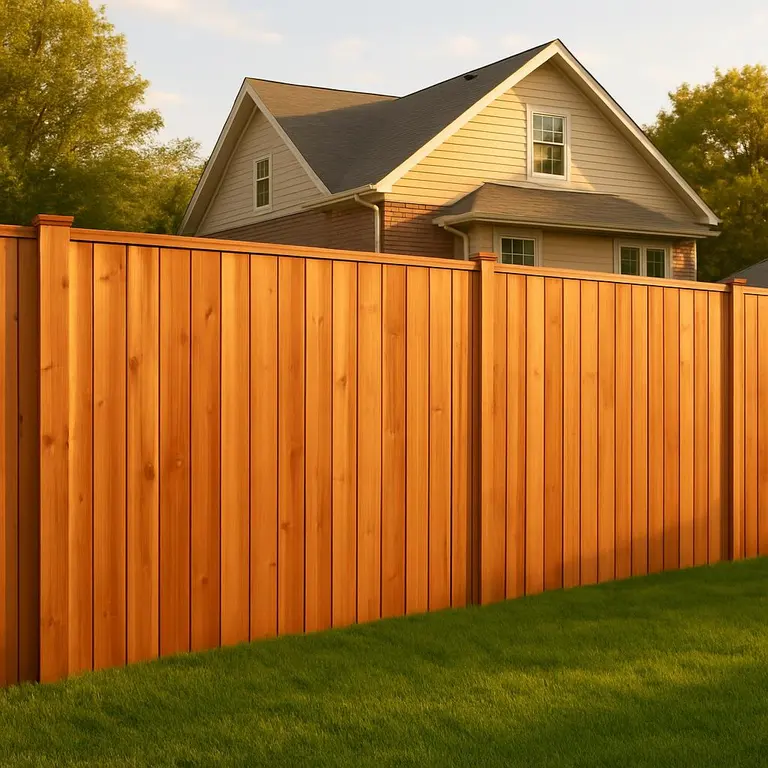
Butted or overlapped boards at 6ft, closing the sightline entirely.
Board-on-board
Overlapped boards, complete privacy, identical from both sides, and it stays private as the wood shrinks.
Post-and-rail
Two, three or four-board ranch fence — the standard for paddocks, frontage and large-lot property lines in this county.
What to expect
How the Installation Runs
- Site walk, material and species selection, and layout.
- PA One Call utility mark-out.
- Permit and HOA submission.
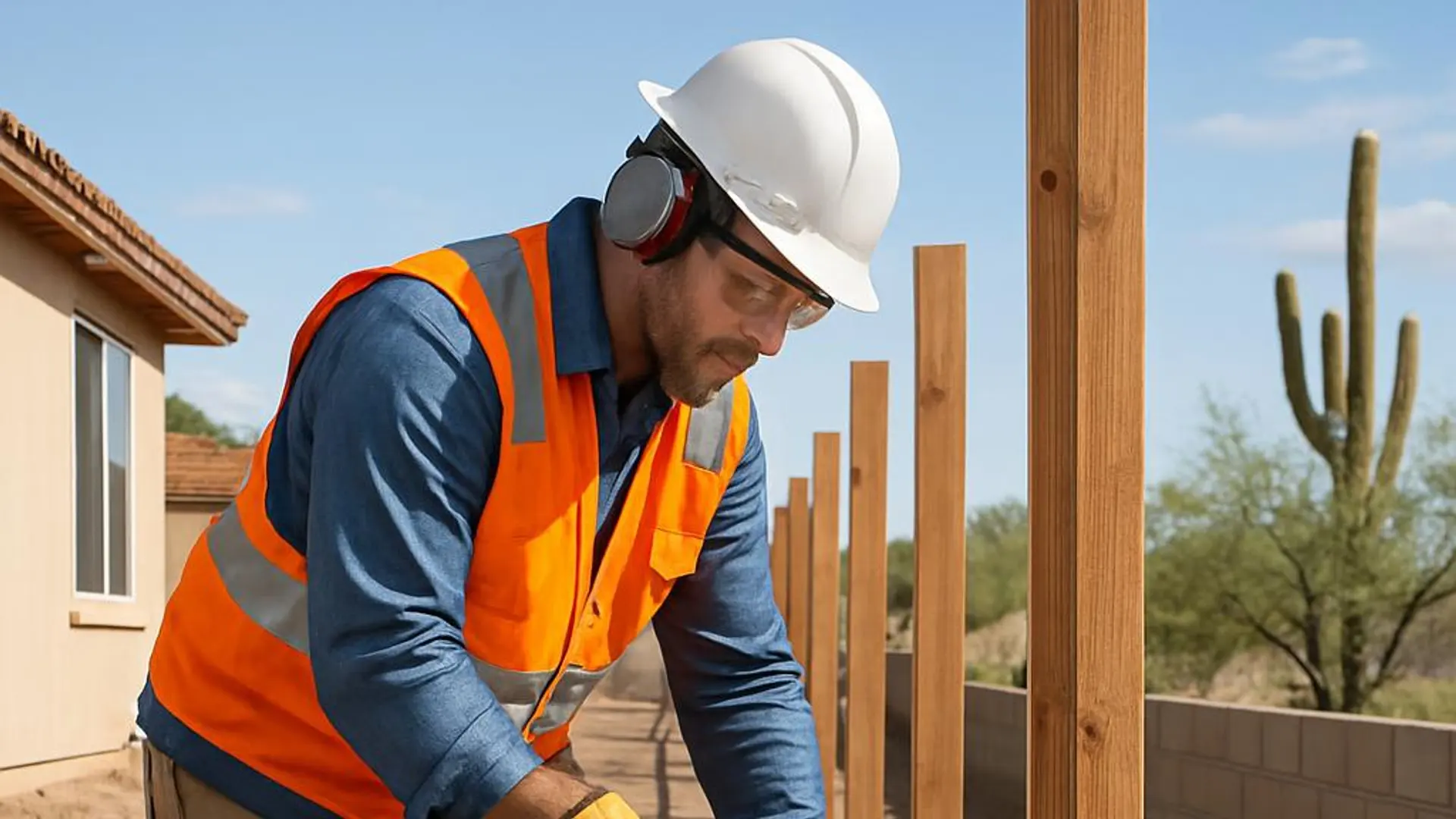
- Post setting — holes sized and dug below frost line, concrete footings, posts left to cure.
- Rail and board installation, gate framing and hanging.
- Walk-through, gate adjustment, and stain guidance if the wood is to be finished.
Common questions
Wood Fences Questions
How long does a wood fence last in Pennsylvania?
Western red cedar typically lasts 15–25 years with periodic staining. Pressure-treated pine runs 10–20 years and needs a more consistent stain schedule to prevent cupping and greying. In both cases the failure point is usually the posts rather than the boards, which is why footing depth and drainage matter more than species.
Should I stain a new wood fence right away?
No. New cedar and pressure-treated lumber both need to dry and release mill glaze or treatment moisture before they will accept stain properly. Cedar generally wants a few weeks; pressure-treated lumber often needs several months. Staining too early traps moisture and the finish fails early.
Is cedar worth the extra cost over pressure-treated pine?
For a visible fence line, generally yes. Cedar is naturally rot and insect resistant, moves less as it dries, holds stain better, and reads as a more premium material from the street. Pressure-treated pine is the right call when budget is the deciding factor or the fence is a back-lot utility run.
How deep should fence posts be set?
Below the local frost line, in a concrete footing, with the hole sized for the post and the load. In our territory that means a substantially deeper hole than most DIY installations use. Posts set too shallow will heave with freeze-thaw cycles and the fence will lean within a few seasons.
What is the difference between cedar and spruce fence panels?
Cedar is naturally rot and insect resistant and holds its dimension as it dries. Spruce is a lower-cost softwood with no natural rot resistance, and it is what most pre-built big-box panels are made from. Spruce panels are markedly shorter-lived and we do not recommend them for a visible property line.
Can you match an existing wood fence?
Usually. Species, board width, rail configuration and cap profile can all be matched on a new run, though a new section will not match the weathered colour of an existing fence until it ages. Where a fence is old enough that the profile is no longer milled, we build to match rather than order panels.
Get a free wood fences estimate
On-site assessment. Written quote. No obligation.