Fence glossary · Styles
Stockade
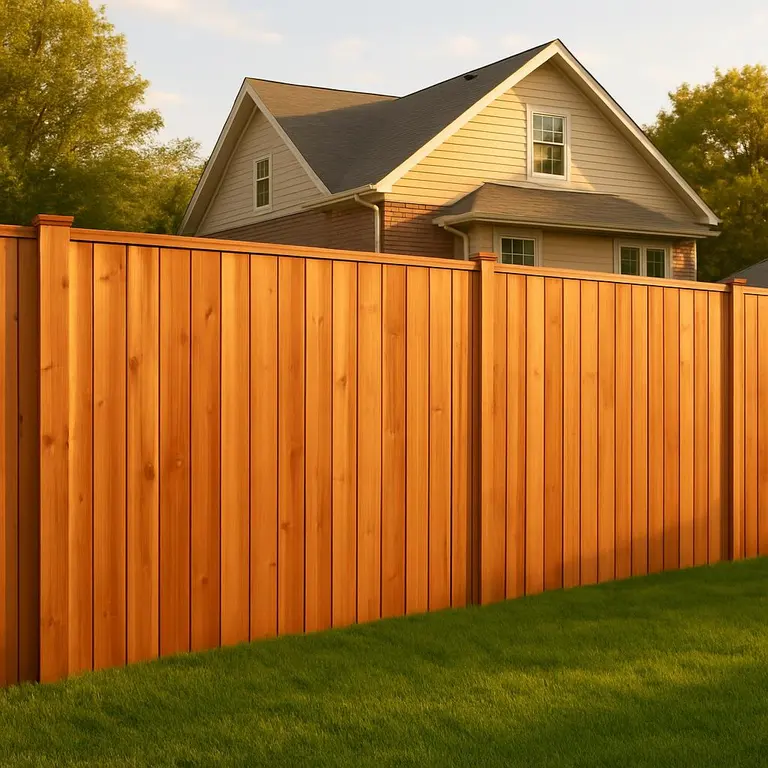
A wood privacy fence built with pickets butted edge to edge against one face of the rails, usually with dog-ear or pointed tops. It is the least expensive way to close a sightline completely, and the style most likely to open gaps as the boards dry and shrink.
Shrinkage is the defining behaviour of the style and the thing to understand before choosing it. Pickets installed tight are rarely fully dry, and over the first summer each one narrows as it releases moisture. Across a long run that adds up to a row of visible gaps, and no fastener schedule prevents it — it is the wood doing what wood does. Board-on-board exists specifically to solve this problem. Stockade in cedar, kept stained, holds its appearance better than pressure-treated pine, which moves more and is likelier to cup.
The bigger variable is whether it is a panel or a stick-built fence, because both get called stockade. Pre-built big-box stockade panels are typically thin spruce pickets stapled to two rails, and they are a genuinely short-lived product on a visible property line. Stick-built stockade — cedar pickets fastened to three rails on posts set in proper footings below the frost line — is a different fence carrying the same name. When someone says a stockade fence only lasted a handful of seasons, they are almost always describing a panel.
Orientation is the other thing to settle up front. The pickets sit on one face and the rails are exposed on the other, so if your township or your HOA requires the finished side to face outward, the rails face your yard. Those exposed horizontals are also a foothold, which rules stockade out as a pool barrier without modification. Barrier height, gap at grade, picket spacing and climbable members are all governed by the code your municipality has adopted, so confirm them there rather than assuming a regional figure.