Fence glossary · Structure
Post cap
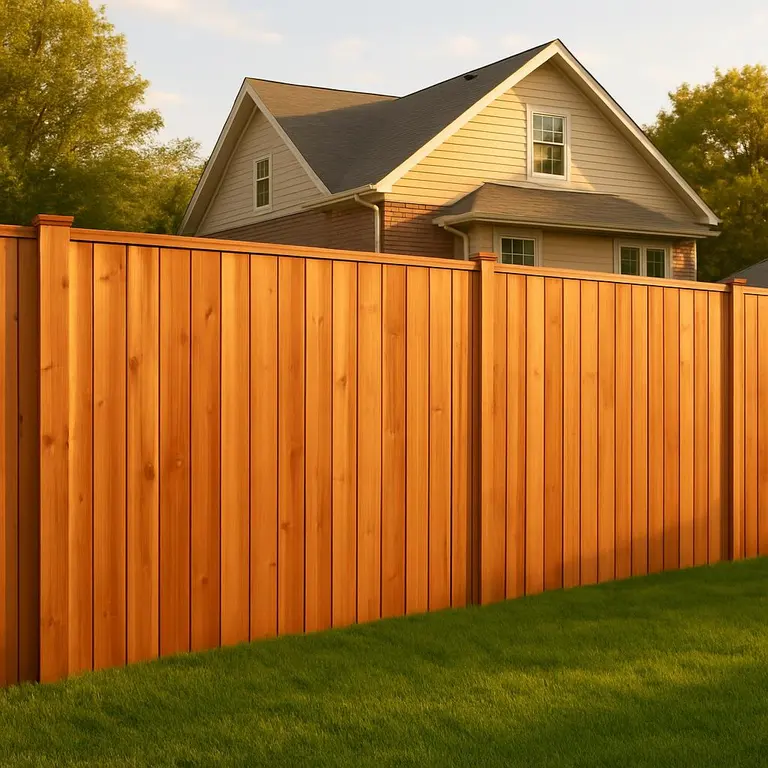
The finished top fitted to a fence post — flat, pyramid, ball, gothic or lit. Beyond appearance it is a water-management component: the cap sheds rain off the exposed end grain of a wood post, which is the point where rot and freeze damage almost always begin.
End grain drinks. A square-cut post top absorbs water like a bundle of straws, and in a freeze-thaw climate the water it holds expands, splits the fibres and softens the top of the post. Almost every wood post we replace has failed either at grade or at the top, and the top failures are nearly all uncapped posts. A cap — or at minimum a bevel cut so water runs off rather than standing — is the cheapest life extension available on a wood fence. Cedar's natural rot resistance helps but does not make an open end grain immune.
On vinyl the cap is a closure rather than a decoration. An uncapped vinyl post is an open tube: rain runs straight down it, collects on the concrete footing at the bottom, freezes there and can split the post or the sleeve from the inside. Vinyl caps are normally glued so they stay put in wind; aluminum caps are fastened or friction-fitted into the extrusion. Either way, a missing cap discovered on a walk-through is worth fixing that day rather than at the next service call.
Cap style is also a streetscape and architectural-review question. On Main Line properties with stone piers, mature planting and older architecture, a flat or low pyramid cap tends to sit quietly and let the house do the talking, while ball and gothic caps make the post line an element in its own right — sometimes exactly what a formal frontage wants. Lit caps carry one caution: they add weight and hardware at the most vulnerable point on the post, and the batteries inside them have a far shorter life than the fence.