Fence glossary · Structure
Line post
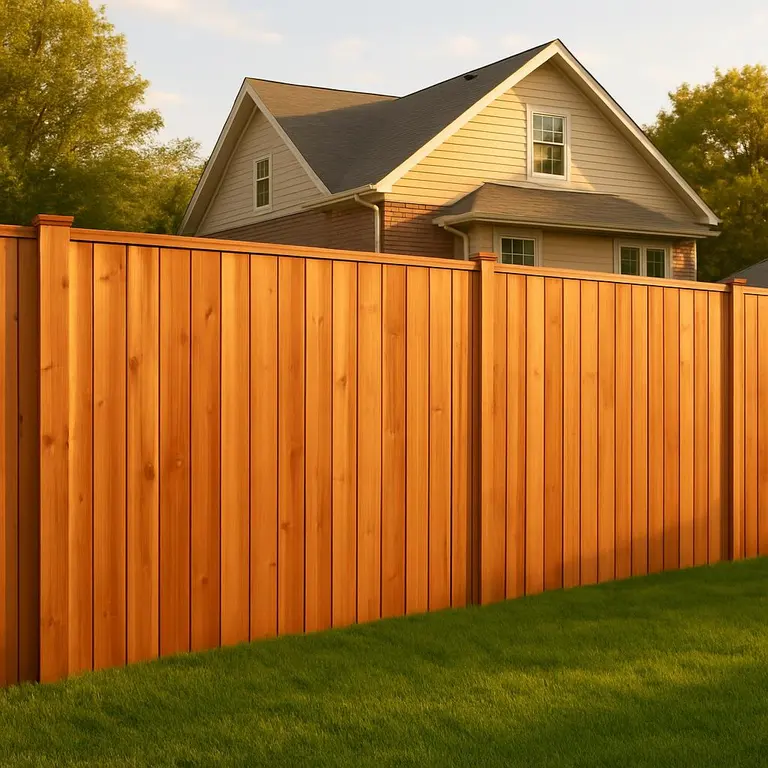
The intermediate posts between terminals, carrying the fence along the length of a run. A line post supports the fabric or panel and resists wind load, but it is not asked to hold tension, so it is lighter than a terminal post and spaced at a regular interval down the line.
Spacing is set by the system, not by preference. A panel fence — vinyl, aluminum, pre-built cedar — fixes the spacing at the panel length, because the panel has to land on a post at both ends. Chain link is the exception: the fabric does not care, so line posts can be spaced anywhere up to the maximum the specification allows, and the interval can be tightened on exposed or tall runs.
That difference is why panel systems are laid out on paper before anything is ordered. Run the layout from one terminal and the leftover distance shows up as a short panel at the far end, usually in the most visible place. Setting out from both ends, or distributing the difference across the last few bays, puts the cut where nobody looks. On a sloped run the same layout decision changes whether the fence racks with the grade or steps at each post, and stepping changes post heights rather than post spacing.
Depth is where line posts get shortchanged, and it is the reason so many fences lean. A line post carries less load than a terminal but sits in the same ground, and the clay-heavy soil across this territory holds water and moves with every freeze-thaw cycle. Footings below the local frost line on every post, not just the corners, is what keeps a line straight in year five.