Fence glossary · Code & Permits
Pool barrier
The fence, wall, gate and hardware assembly that separates a swimming pool from the rest of a property, and the only fence type with a code section written specifically about it. A barrier is judged as a system: height, gap at grade, opening spacing, climbable members and gate hardware all have to pass together.
The word matters because a pool barrier is a specification, not a style. A fence can be tall enough, built well and still fail inspection on a single item — a rail on the wrong face, a low spot under the bottom, a gate that closes most of the way. Inspectors work the list, and every item on the list is pass or fail on its own.
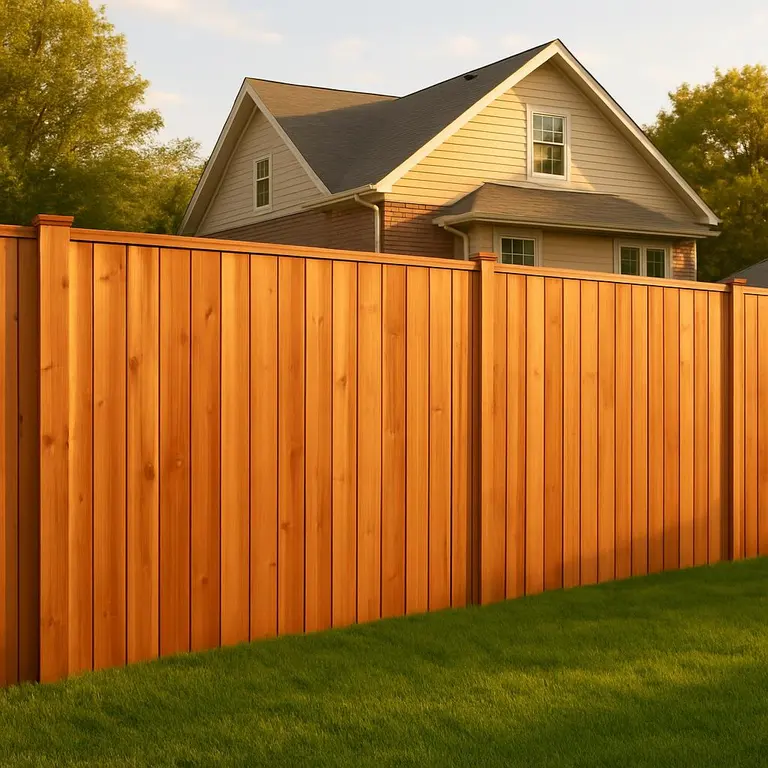
Barrier height is measured from finished grade on the side facing away from the pool, so anything that raises the ground outside the fence reduces the effective height: a berm, a retaining wall, a raised planting bed. The gap at the bottom is measured at the worst point along the run rather than the average, which is what catches barriers built across rolling ground. Opening spacing has to be narrow enough to reject the gauge the code specifies, which is why ranch rail and wide-spaced picket cannot serve. And the outside face must carry no climbable horizontal member within the barrier height, which is the requirement that disqualifies most existing wood fences.
Pennsylvania regulates residential construction through the Uniform Construction Code, but municipalities adopt, enforce and sometimes amend it independently and on their own schedule. The height, spacing and latch-height figures that govern your property come from your township or borough code office, not from a general reference. Confirming them before material is ordered is the difference between a barrier that passes the first time and one that gets rebuilt.